From the outset, the three-year support provided as part of the BMZ-funded global project ‘Strengthening Farmers’ Organisations’ (GV StäBO) pursued the goal of strengthening UNPR-B in the long term as an effective interest group of rice producers. The focus was therefore less on specific activities and more on fundamental issues of organisational development.
Milestones of the collaboration
Key results of the collaboration included the development of a five-year strategic plan, the clarification of responsibilities within the association and the implementation of a financial audit. The establishment of a marketing committee was also an important step towards opening up new markets and reducing dependence on the state market.
As President Georges Kienou confirmed, the organisation has been strengthened in particular in terms of improving communication between the national and regional levels. UNPR-B is now better equipped, with clearer roles and stronger internal coordination overall.
Sustainability of achievements
At the same time, the question of securing the progress achieved remained a central issue. How can UNPR-B continue to develop using its own resources after the end of the support programme? With regard to new sales markets in particular, it was emphasised how important it is to maintain a dynamic marketing committee in order to enable the transition to greater autonomy. Another starting point was seen in ensuring effective and operational leadership and in the long-term implementation of the skills acquired in the course of organisational development – not least in order to regain the trust of the membership base in a targeted manner.
A path to greater independence
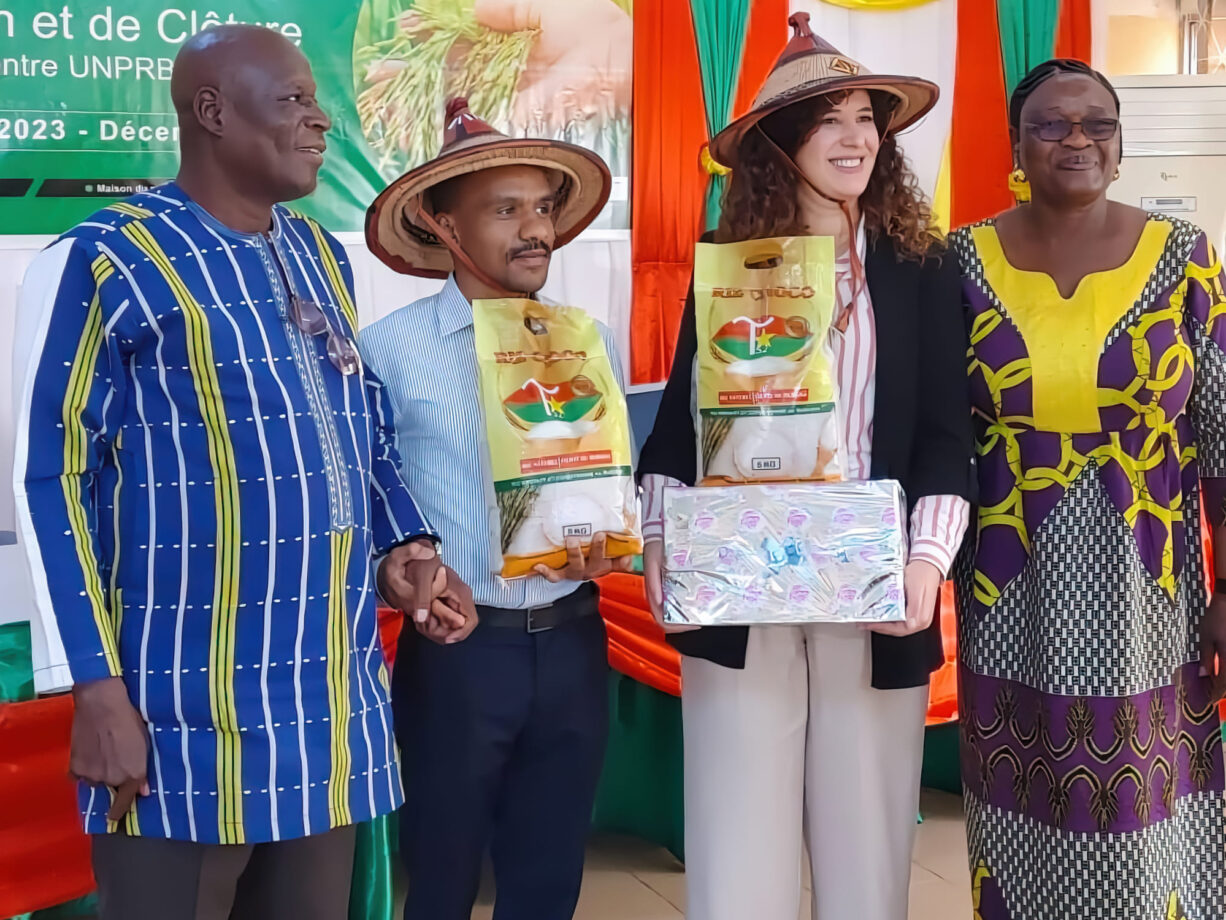
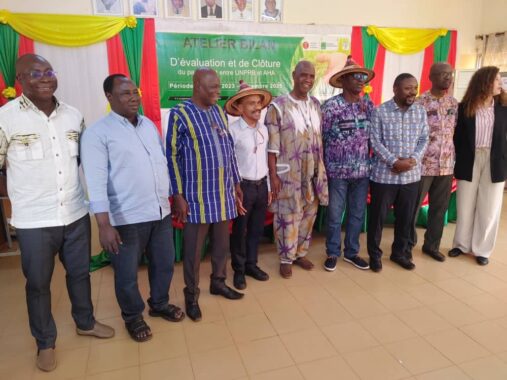
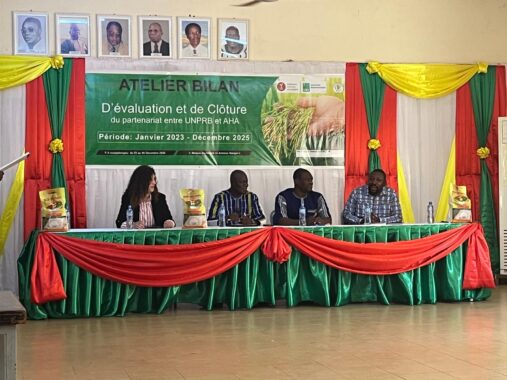
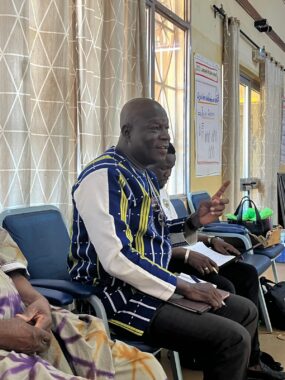
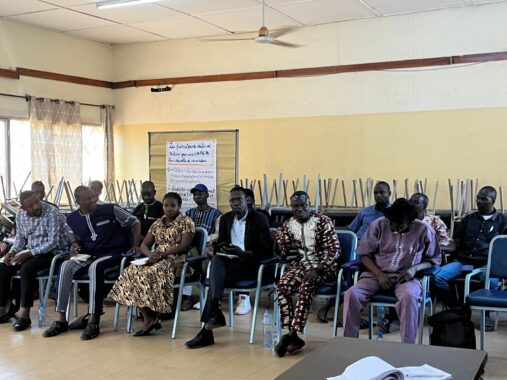
The closing ceremony was thus also part of AHA’s exit strategy. The aim was to conclude the joint work in an appreciative manner and to encourage UNPR-B to continue independently on the path it had chosen. As several partners emphasised, it is now up to the association itself to consistently apply and further develop the organisational development tools that have been developed and to use them to adapt to the challenging changes in security policy, agricultural policy and climate.
The closing ceremony was therefore seen less as an end point and more as a transition to greater personal responsibility and self-efficacy. As Madame Ouedraogo, Secretary General of UNPR-B, emphasised, the conclusion of a collaboration is not synonymous with its end.
With this in mind, we would like to thank UNPR-B for their collaboration and wish the association all the best for the future.