Empowering People & Organisations Worldwide

by Nicole Bolomey

The Andreas Hermes Akademie has been empowering people and organisations in agriculture for 20 years – in Germany and around the world. With proven training programmes, organisational development support and sustainable networks, farmers are actively shaping their own futures. The results speak for themselves.

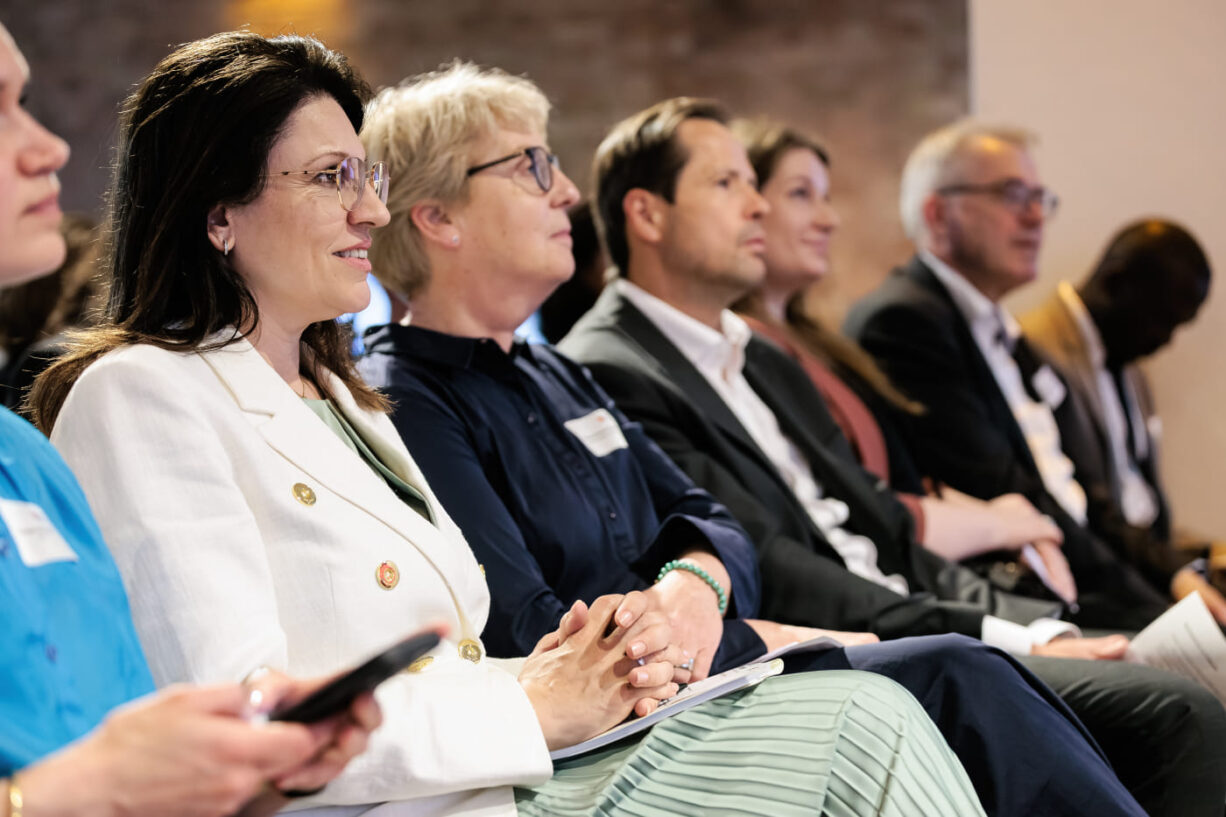
Foto: Andreas Hermes Akademie / William Veder

Empowering people in the agri-food sector has always been at the heart of the Andreas Hermes Academy’s (AHA) work. Whether as entrepreneurs, farm managers, elected leaders or committed members of their organisations – our aim is to support people in realising their potential, taking on responsibility and actively shaping the future of agriculture. This applies equally to Germany and to our international partner countries. 

In doing so, we not only work with individuals. Our experience shows that the greatest changes occur where people organise themselves. National and international associations, small and large cooperatives, open networks, federations or other forms of collective action are ideal for this purpose. Some of these are conservative, others are drivers of innovation. Some are young and agile, others are established in their structures. These organisations are not always ‘trendy’. They are however the most effective lever for sustainably improving farmers’ living and working conditions.

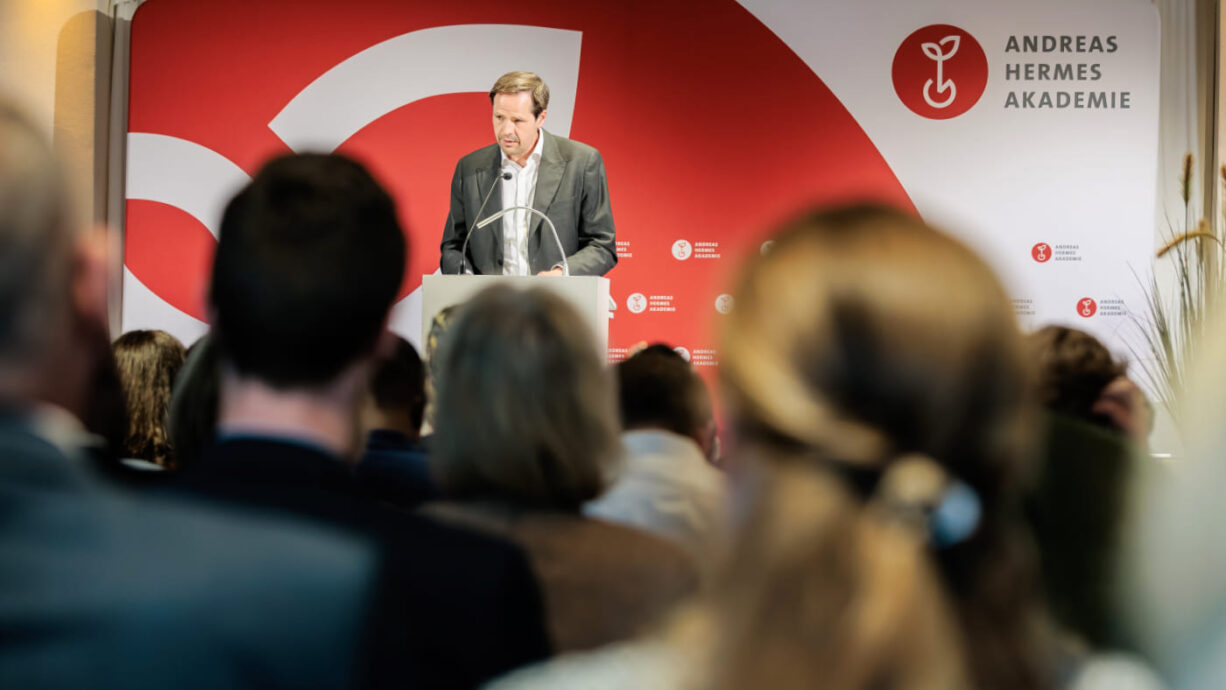
Foto: Andreas Hermes Akademie / William Veder

With the project “Strengthening Farmers’ Organisations for Sustainable Agricultural Development” (StäBO), funded by the Federal Ministry for Economic Cooperation and Development (BMZ) and supported by GIZ, we have been pursuing this approach for the past ten years. The results speak for themselves. UNYFA, the Young Farmers’ Federation of Uganda, for example, has been able to grow significantly thanks to organisational development support. What began as a small initiative has grown from 0 to 43,000 members (as of 2025). KENAFF, the Kenyan National Farmers’ Federation, was a shadow of its former self in 2016 and barely capable of taking action. Today, it ranks among the strongest farmers’ organisations in Africa and, as of last week, its CEO has been elected in WFO as World Farmers’ President. 140 young leaders who have completed the intensive leadership development programme ‘Young Leaders Incubation Programme – YLIP’ are now shaping agriculture and agribusiness in southern and western Africa as leaders, entrepreneurs and innovators. 

 The impact of this approach can also be measured in figures. In recent years AHA has built the capacity of 41 member-based farmers’ organisations and 15 apex organisations at national, regional and global levels. This collaboration resulted in a great number of professional services for members, which reached over 260’000 farmers over the 10 years. Behind these figures are people, who are running their farms more successfully, tapping into new income opportunities, taking on responsibility within their organisations and, in turn, supporting others as multipliers. This is precisely where the particular strength of our approach lies: Impact is not limited to individuals, but spreads far beyond the actual project activities through strong organisations, local leaders and effective networks. 

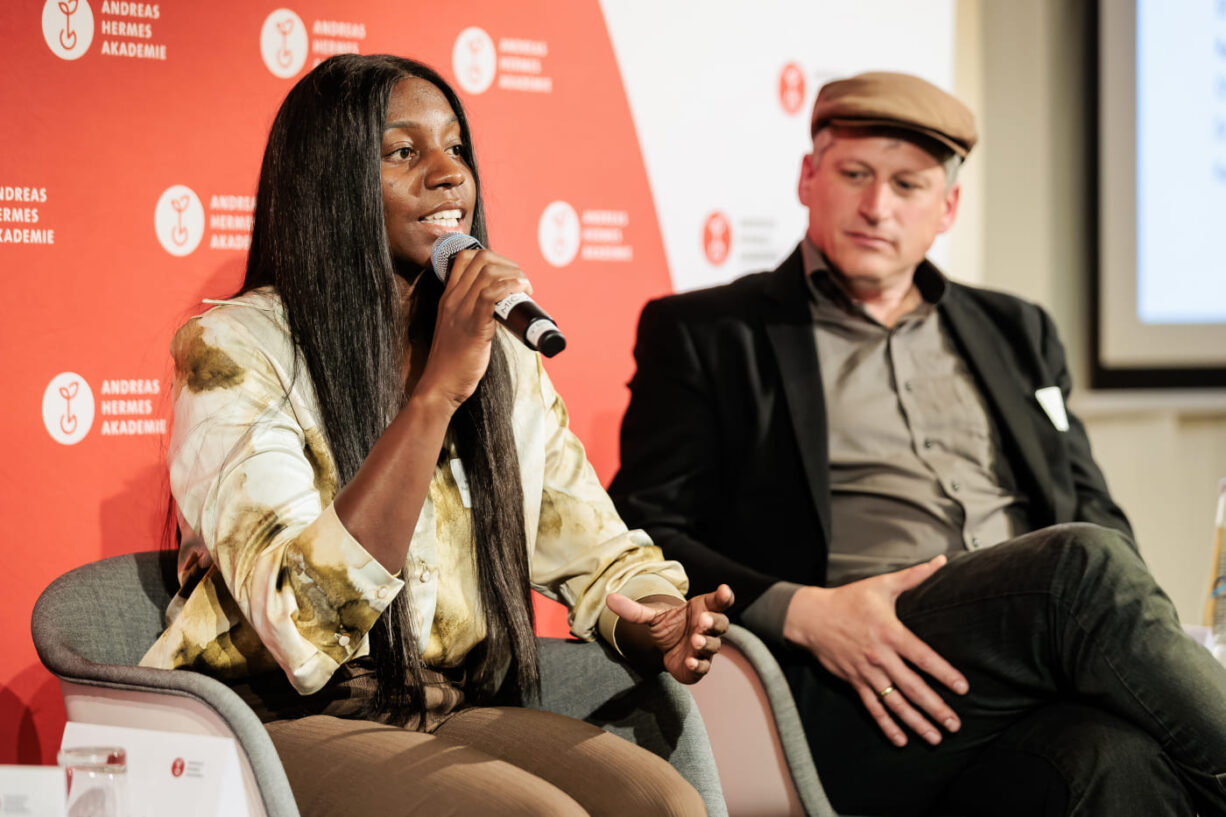
Foto: Andreas Hermes Akademie / William Veder

Our international activities did however not begin in 2015. As early as 2006, at the request of GIZ, the idea arose to adapt the b|u|s entrepreneurship training – a flagship programme in Germany for many years – for the situation of farmers in developing countries. Over two decades, a pool of 496 trainers was built across the African continent and in India, who today are able to deliver the tried-and-tested b|u|s entrepreneurship training programmes in French, English and over 20 local languages. Through training programmes for entrepreneurship, cooperatives, leadership and others, approximately 10.000 farmers have been reached to date, of which 4150 are women and 2,250 young people. By embedding the training programmes as a service provided by farmers’ organisations, these organisations remain active. Regular refresher courses, master trainer programmes and international exchanges ensure quality and shared values.  

 Looking back on 20 years of international cooperation, one thing is clear: development does not arise from the distribution of funds only. It arises when people are empowered to shape their own future, cooperate in professionally run organisations, represent their own interests and seize economic opportunities. In a globalised world, the future of the agri-food sector does not depend on decisions taken in Europe, the US or China. Food security, climate protection, stable markets and resilient value chains can only be achieved if farmers in the global South are equally strong and professional actors in their own development. 

 If we want to strengthen agriculture, we must empower people. If we want to make food systems sustainable, we must strengthen organisations. The past 20 years have shown that this approach works. The stories of our partner organisations, trainers and leaders demonstrate what is possible when people take responsibility and learn from one another. 

 This is something we can all be proud of. And it is something we want to build on in the future. 
The Author

Nicole Bolomey

Director international