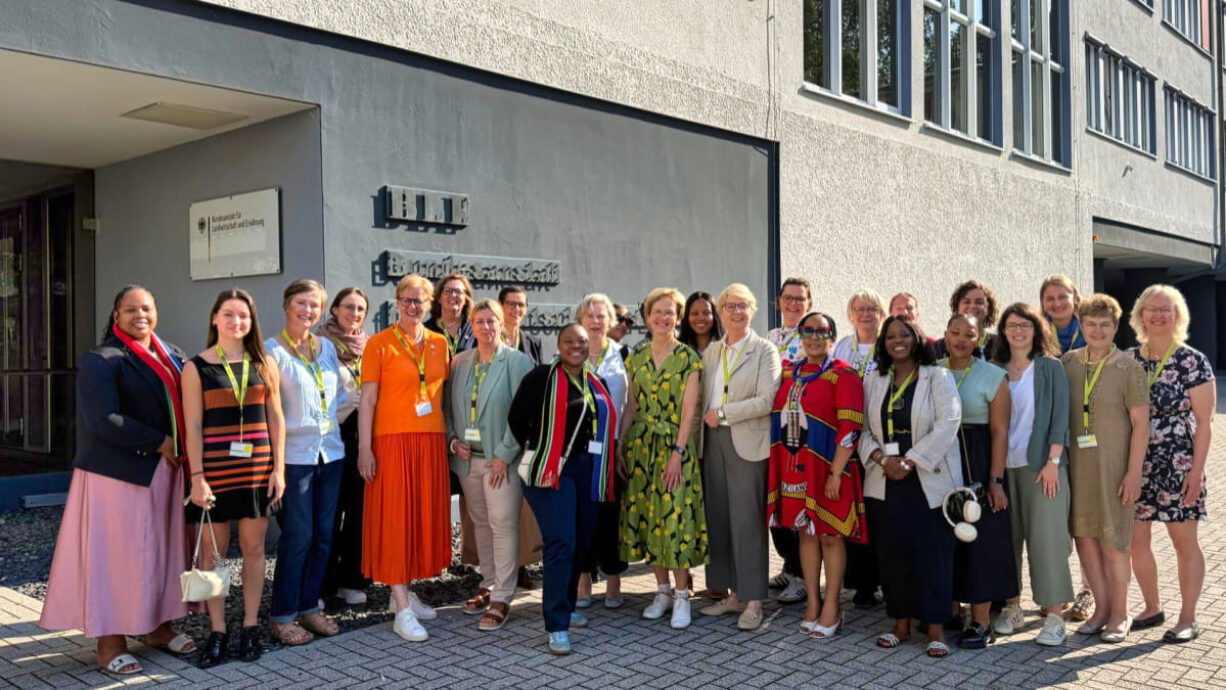
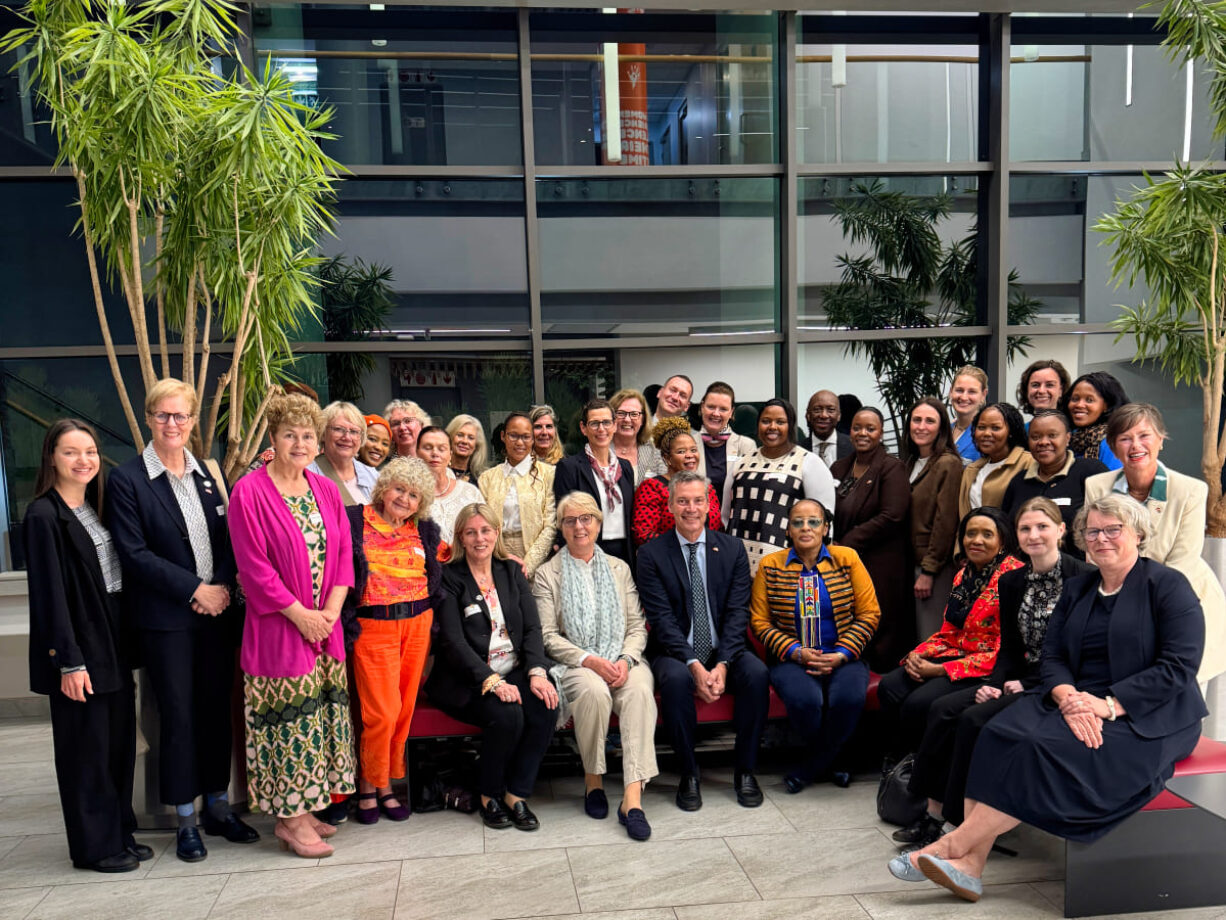
In early 2026, we invited 20 women from Germany and South Africa – working in agriculture and agribusiness, aged between 26 and 80, and from diverse social, cultural and economic backgrounds – to spend one week each in April in and around Pretoria and Cape Town, and one week in June in Bonn and the surrounding area.
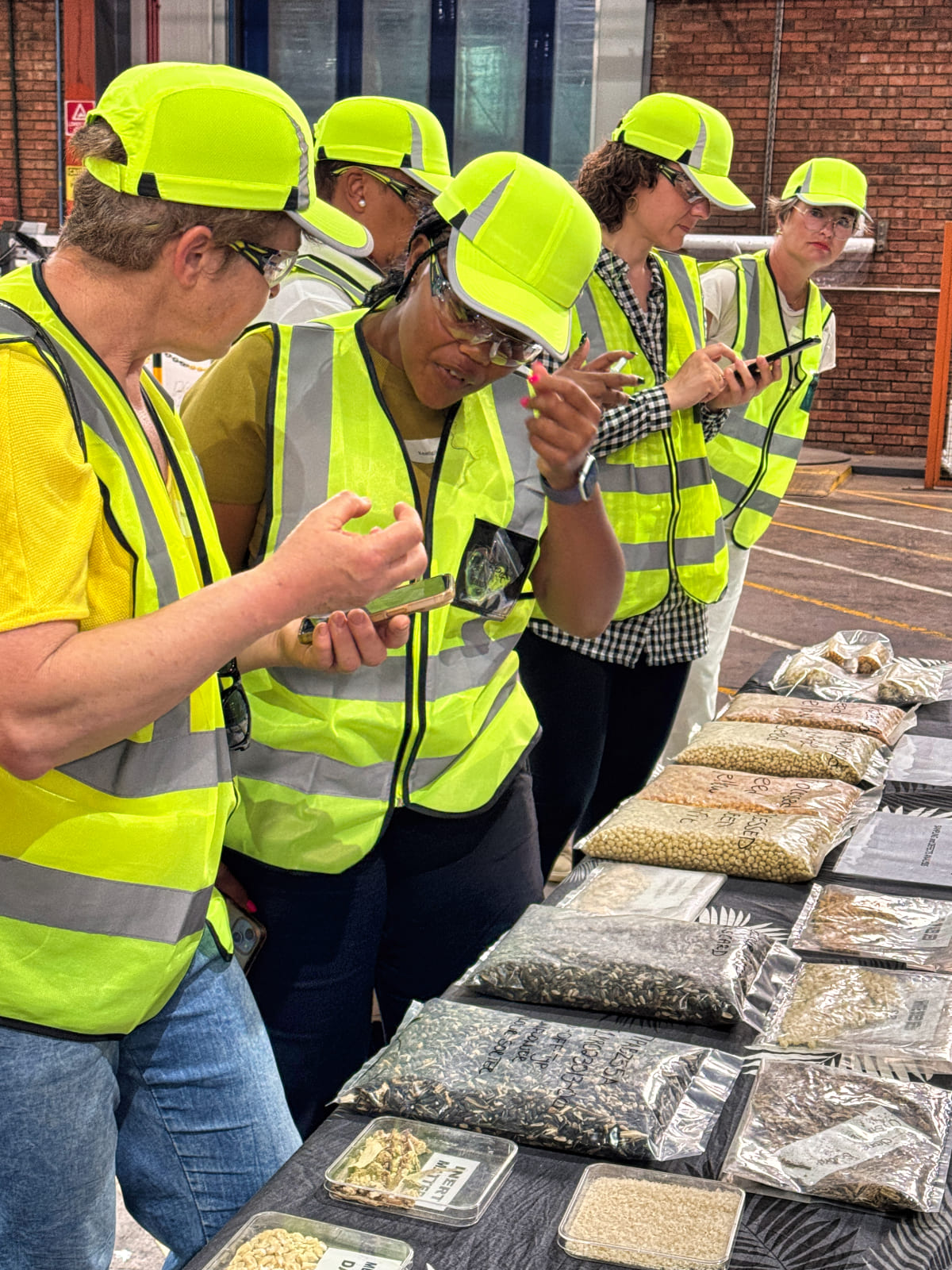
During our visit to South Africa in the autumn, we visited, amongst other places, women-led businesses such as Lefakong Moringa Farming and the Delheim Winery. A visit to the seed and agrochemical manufacturer Corteva introduced us to the ‘Soil-Sisters’ programme, which specifically trains and supports women. Panel discussions with representatives from the South African Ministry of Agriculture, the regional farmers’ association SACAU, the national associations AFASA and AgriSA, the financial institution LandBank, the pan-African policy network FANRPAN, and the agricultural attaché at the German Embassy opened our eyes to the local aspects of trade, finance and access to land. It became clear that programmes to support women entrepreneurs remain rare in both South Africa and Germany and are not accessible to everyone. Having women in key positions within institutions helps to bring these challenges more firmly into the spotlight and to seek innovative, tailored solutions.
It was impressive to hear about the transformation of agriculture in South Africa, which today produces and sells its produce on the open market without subsidies. Differences between black and white farmers still exist, but we saw that, particularly in the emerging farmers’ segment, the problems are similar for everyone and that cooperation between the associations is developing positively to pave the way for young, aspiring female entrepreneurs of all backgrounds to contribute successfully to this important economic sector. The week was rounded off by a reception at the German Embassy in Pretoria and an evening with an almost entirely female guest list hosted by Consul-General Tanja Werheit at the historic residence of the Consulate-General in Cape Town.
In Germany, where the weather was warm and summery, a packed programme was also on the agenda, taking us from the Münsterland to the Eifel. Among other places, we visited the Lehnertz poultry farm and the Hof Hueske livestock farm, both run by young female entrepreneurs. Many participants found it particularly moving to see how these young women manage to balance running their businesses with family life. This is only possible thanks to the support of their families, partners and progressive employers, as well as the progressive nature of parental leave, which provides the necessary flexibility. Equally impressive was the visit to Agnes Böcker, whose farm stands out for its broad diversification across production, direct marketing and farm experiences.
A highlight was the visit to the Federal Office for Agriculture and Food (BLE) in Bonn, where President Dr Margareta Büning-Fesel facilitated an open and extremely engaging discussion with the participants on issues relating to female leadership. The various panel discussions and talks in Germany and South Africa with representatives from business, politics and various associations repeatedly demonstrated that, whilst the role of women in agribusiness and agriculture is far from ideal, many institutions are now addressing this issue. Issues such as access to land and finance continue to pose a major challenge in both countries, albeit in different ways. We hope that the projects presented to us (for example, those aimed at improving access to loans) will actually be implemented.
The WTA programme was initiated by the Women in Agribusiness network, its founder Hella Otten and the Vice-President of the German Farmers’ Association, Susanne Schulze Bockeloh, in collaboration with the German Farmers’ Association’s (DBV) Expert Committee for Women Entrepreneurs. Even the very first edition, which brought together women from Kenya and Germany, continues to have an impact to this day. It gave rise to the Women in Agribusiness Kenya network, which remains active. The Andreas Hermes Akademie has designed and organised WTA from the very beginning and has consistently further developed the format with the second edition, which took place between South Africa and Germany.
The true value of the two weeks was particularly evident outside the official programme: in the exceptionally strong cohesion of the group, in the spirit of sisterhood that was lived out, and in the open exchange about personal challenges, entrepreneurial development and the participants’ business models. At the same time, the women held up a mirror to themselves and to the countries they visited. In both Germany and South Africa, women remain structurally under-represented in agriculture and agribusiness and are all too rarely found in positions where strategic decisions are made. Culture, tradition and development all play a part in this in different ways. It was precisely this contrast between great personal strength and structural hurdles that made the two weeks of exchange particularly impressive.
WTA is set to continue. The Andreas Hermes Academy, together with the programme’s initiators, is also pursuing the goal of establishing a joint alumni network for all participants and setting up a regular online exchange platform to strengthen the relationships forged and the professional exchange in the long term. The aim is for the exchanges to give rise to a sustainable community that will have an impact far beyond the official programme period. Further exchanges, including those outside Africa, are also being planned, and fundraising is in full swing. The Andreas Hermes Academy would like to thank all participants, representatives and partner organisations for their trusting cooperation.