The true impact of a project often becomes visible only after it has officially ended. That is when it becomes clear whether trainings, study visits and exchange formats merely created valuable moments — or whether they led to networks, routines and tangible change. This is precisely the kind of impact that can now be seen around one and a half years after the conclusion of the BMLEH-funded bilateral cooperation project to strengthen the capacities of Southern African Confederation of Agricultural Unions (SACAU) members on climate resilience.
During the three-year project from 2021 to 2024, peer-learning formats, virtual exchanges and study visits were organised together with SACAU, the umbrella organisation representing 19 national farmers’ organisations from 12 countries. The aim was to enable representatives of farmers’ organisations to learn from one another, draw on external expertise and develop their own solutions for their members. Together, SACAU’s member organisations represent more than 6 million farmers across southern Africa.
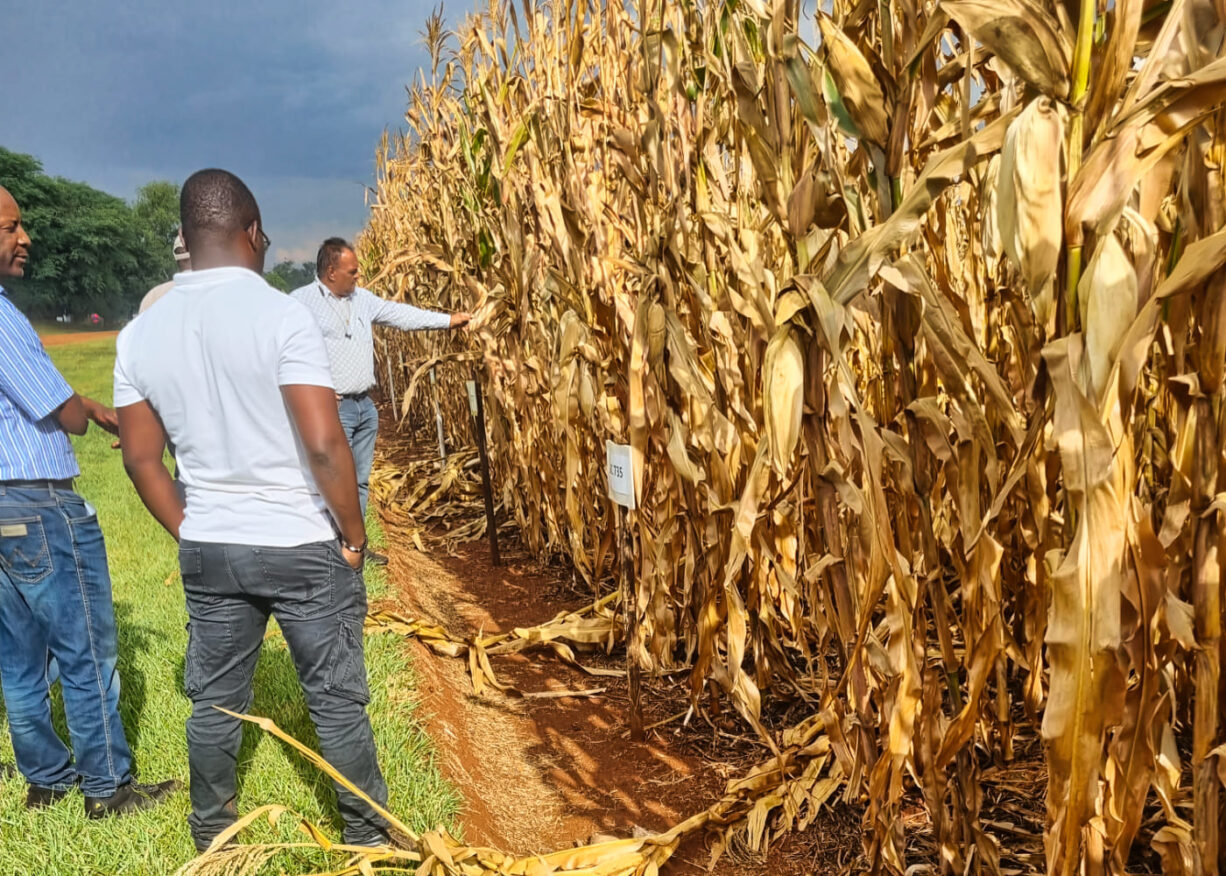
One key element was the Community of Practice on Climate Resilience (CoP). Through the CoP, representatives of farmers’ organisations built expertise on climate-resilient agriculture and exchanged with regional as well as German research and technology centres.
Continued Exchange with Current Relevance
One and a half years after the project ended, one thing is clear: the Community of Practice continues to operate beyond the period of project funding. Its members remain connected, share information and use the network that has been created to respond early to climatic developments.
One concrete example is the preparation for the expected El Niño development and its possible effects on the 2026/27 rainy season. Even before the start of the next growing season, experts are being involved to help SACAU’s farmers’ organisations and their members prepare in good time: What can be expected? What does this mean for rainfall, temperatures and cropping decisions? And what measures should farms start preparing now? These preparations directly contribute to strengthening the climate resilience of agricultural systems in the region in the face of the growing impacts of climate change.
From Exchange to Application: Pfumvudza as an Example of Knowledge Transfer
The project’s impact can be seen clearly in one practice that CoP members encountered during a study visit to Zimbabwe: Pfumvudza, a Shona term meaning “new growth”. This conservation agriculture approach uses planting basins, soil cover and more efficient use of limited soil moisture.
What initially began as a learning moment during project activities was carried forward by CoP members — into their countries, organisations and networks. Young agripreneurs within the organisations also picked up the approach, linked it with entrepreneurial thinking and developed it further.
This is no longer just about small-scale demonstrations. It is about making these methods practical at a larger scale. Where the work was previously done by hand, motorised earth augers are now being used in some cases to dig planting holes more efficiently. This is where project impact becomes tangible: knowledge is not only passed on. It is adapted, tested and put into practice.
Farmers’ Organisations as Key Representatives of Agriculture in National Climate Policy Processes
The farmers’ organisations themselves were also able to increase their relevance and visibility through the project activities. One example is the work around Nationally Determined Contributions (NDCs).
During the project, SACAU and the respective national farmers’ organisations organised workshops in six countries on the role of agriculture in the NDCs. This helped create new relationships and entry points into policy processes. The farmers’ organisations gained a clearer understanding of where agriculture is discussed in national climate processes and how they can bring in the perspectives of their members. At the same time, government actors increasingly recognised farmers’ organisations as key representatives of the agricultural sector. In several countries, they are now more closely involved in ministerial structures — in some cases also as members of relevant committees or working groups on the NDCs.
In this way, the project has built an important bridge: from technical awareness-raising on NDCs to concrete political participation by farmers’ organisations in national climate processes.
Impact Beyond Climate Resilience
It is also noteworthy that the project is having an impact beyond its original core topic. The network that has emerged is being used to bring new issues more quickly into the member organisations. One current example is the CoP’s exchange on standards and due diligence requirements that must be met for exports to Europe.
The CoP is therefore becoming more than a space for technical exchange. It is developing into a regional learning infrastructure.
What Remains — and What Matters Next
The project did not merely implement activities. It created relationships, routines and technical connectivity. The CoP continues to exist, knowledge is being shared, young agripreneurs are translating ideas into practice, and new topics are finding their way into farmers’ organisations across the region.
This is not a loud or highly visible form of impact. But it is impact that endures: from the study visit to the field, from exchange into organisations, from individual learning moments to a regional structure that continues to operate.
By doing so, the CoP also creates and maintains the conditions needed to take up new issues quickly, prepare them and share them across a broad network. For future projects, it therefore offers an opportunity to move into implementation more rapidly and to potentially reach millions of farmers through an already established network.