Young Farmers Exchange: From Brazil to Germany – and the connections made along the way

by Baidy Wane

It was only at the closing event of the Young Farmers Exchange in Berlin that things came full circle: Looking back on the past ten days, Brazilian participant Alexandre quoted from Farmers’ Organizations, a handbook published jointly by AHA and WFO. But how did he come across it in the first place?

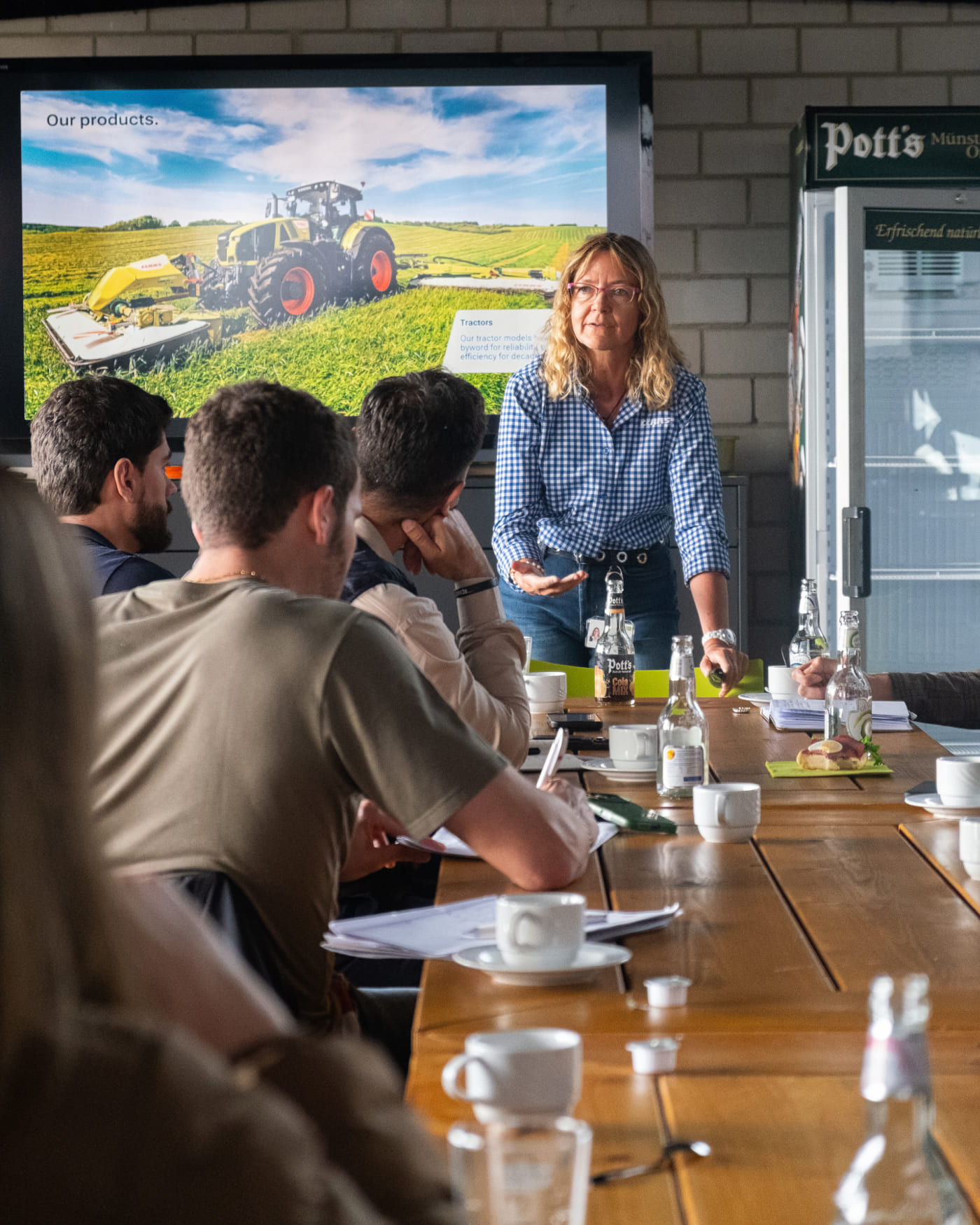
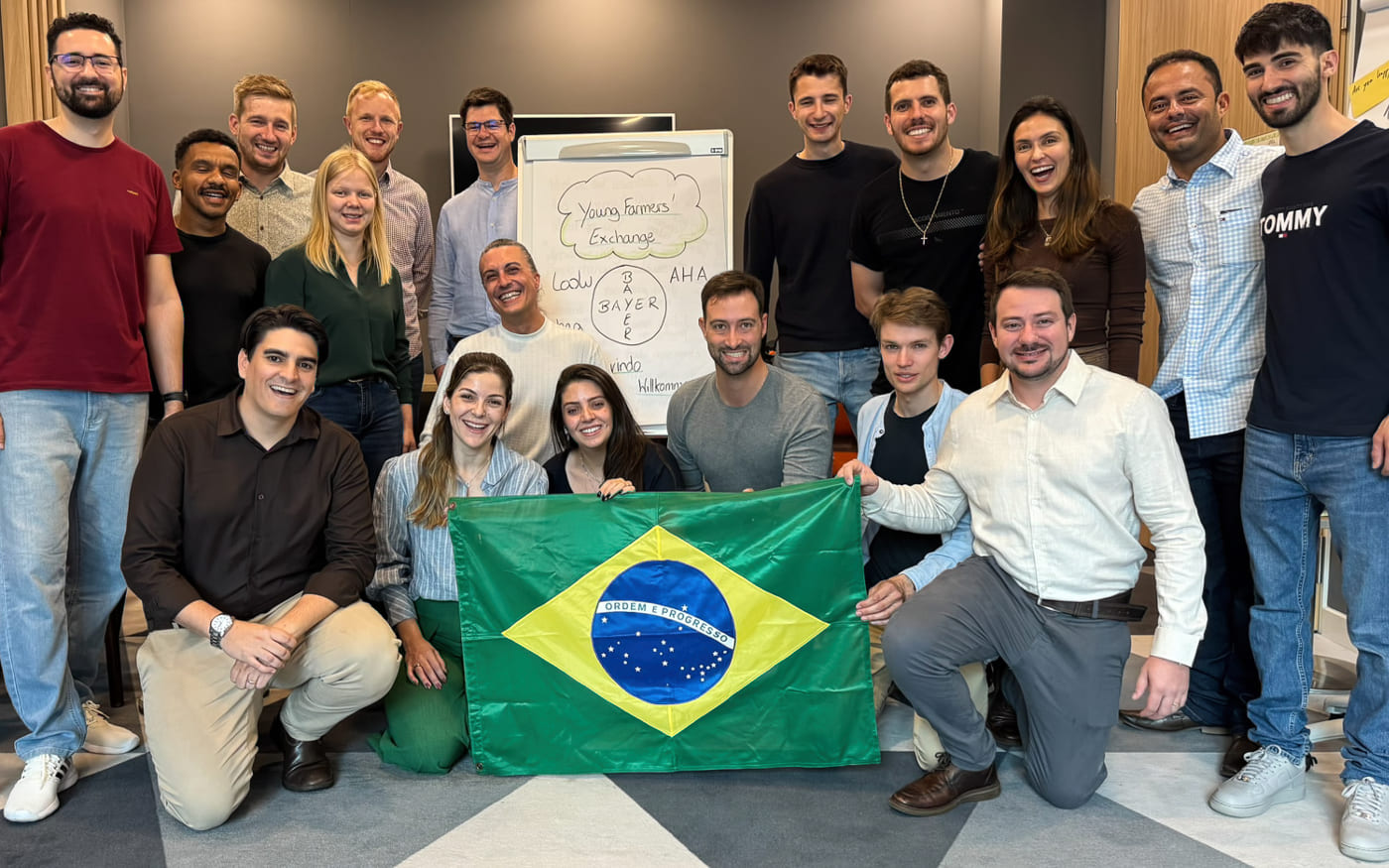
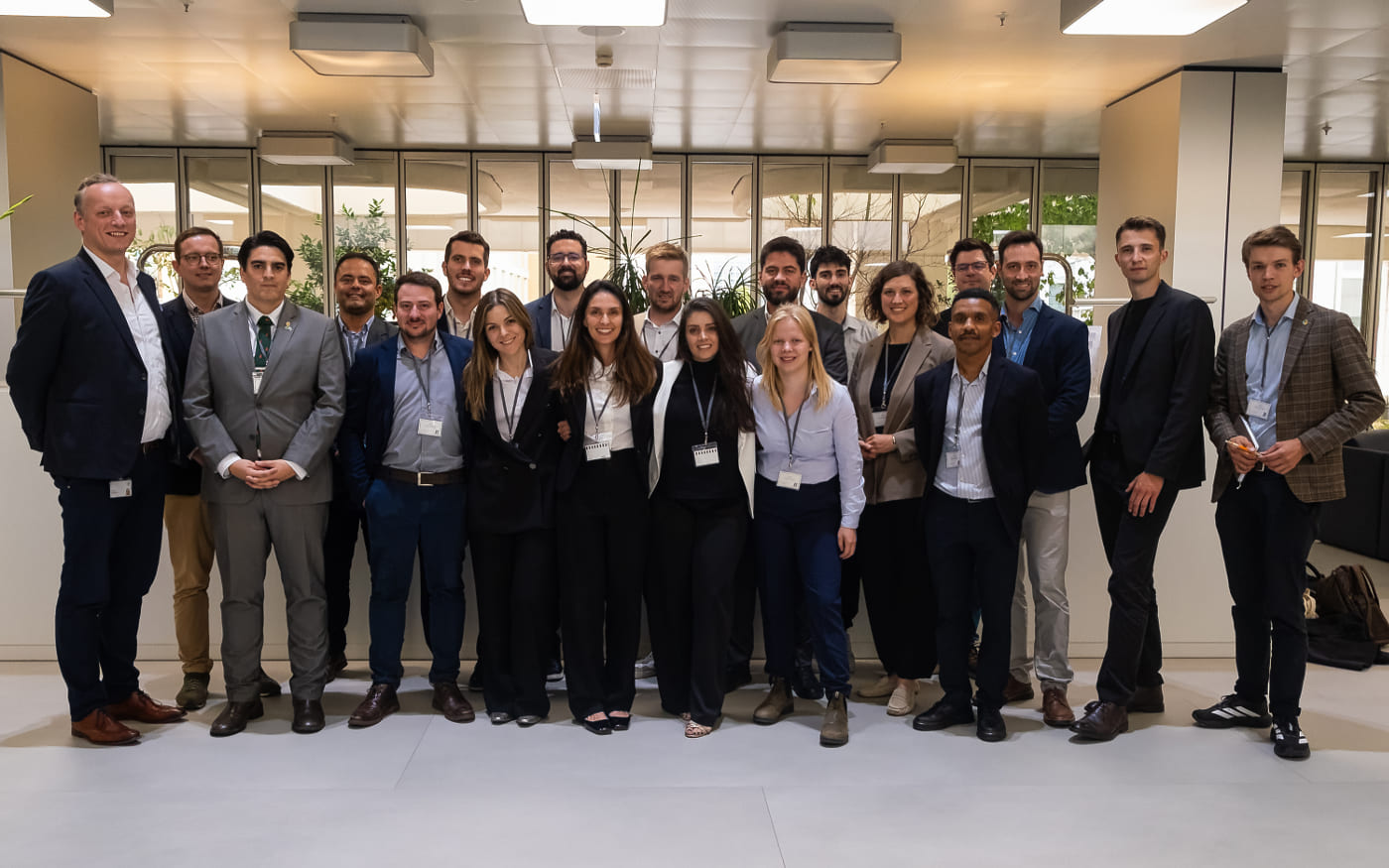
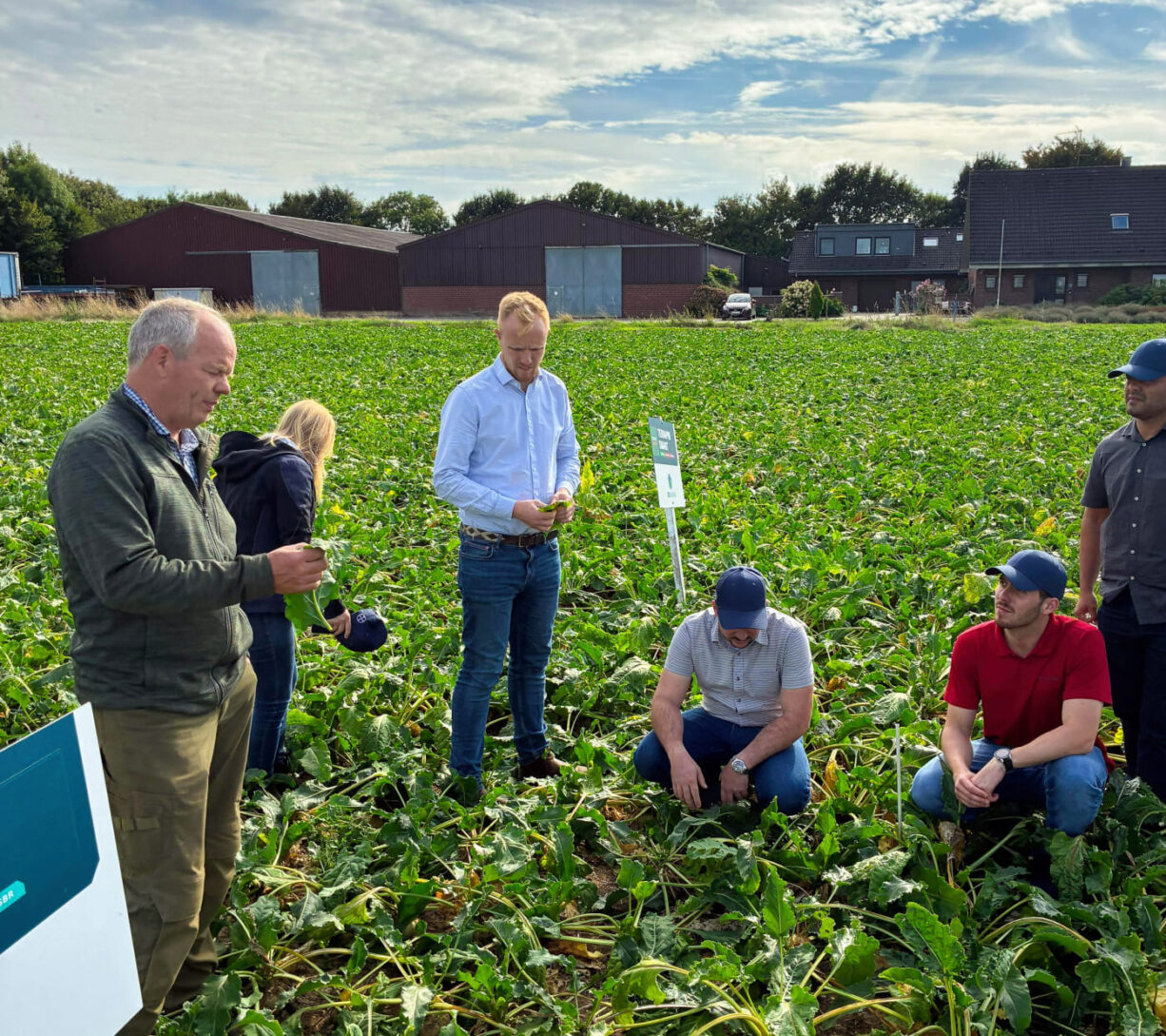
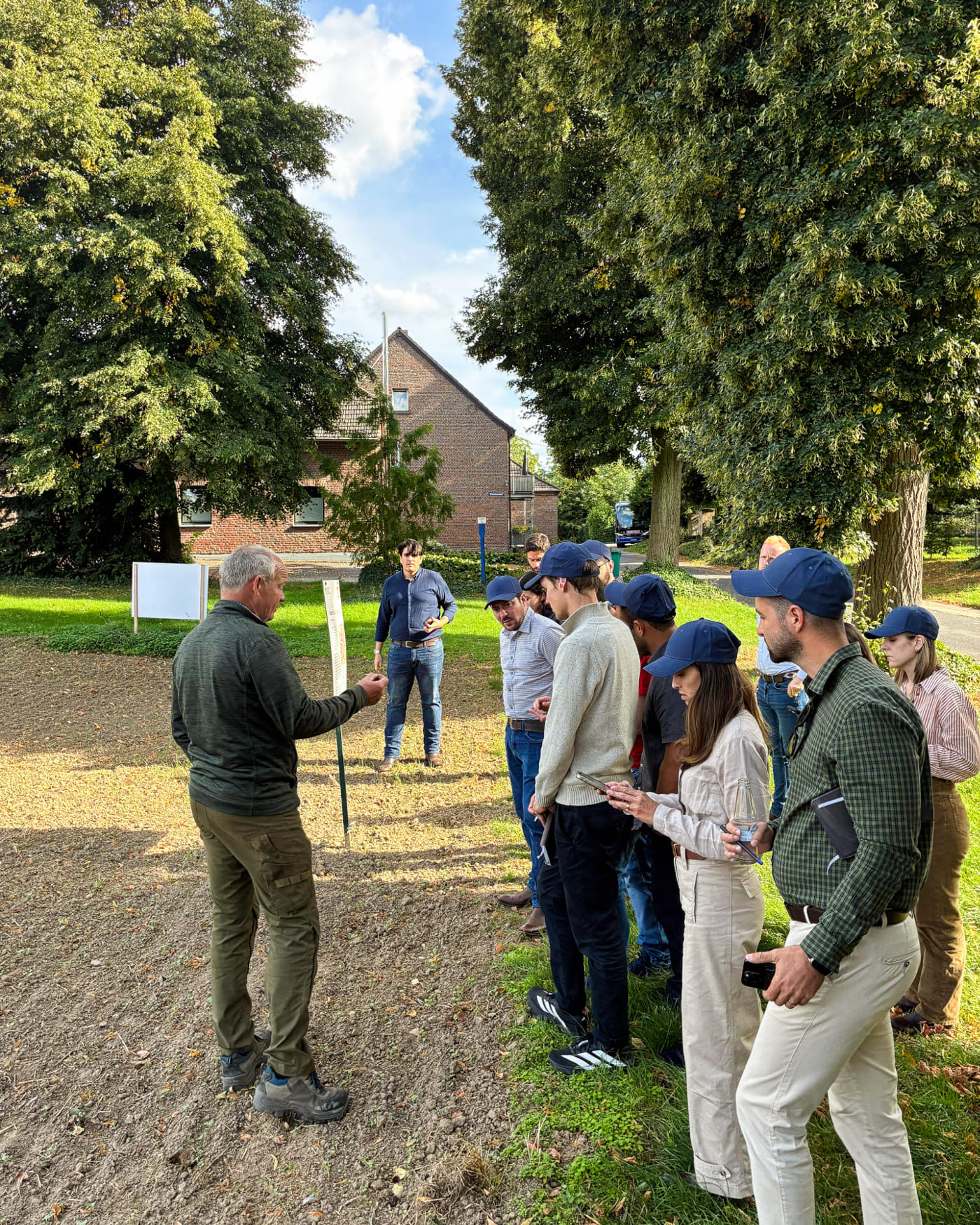
There was certainly little time during the trip to delve into agricultural literature. The programme for the ten German and ten Brazilian participants was packed. Over ten days, they travelled from Cologne to Berlin, stopping at several locations along the way. The programme included visits to agricultural organisations and companies, research institutions, political actors and organisations working in international cooperation, as well as a three-day stay on the farms of their German counterparts. The exchange was initiated as part of the German-Brazilian Initiative for Cooperation in Agribusiness and Innovation of the Latin America Committee of German Business (LADW), with Bayer as the main sponsor. AHA organised and accompanied the exchange and facilitated several workshops for joint reflection. After all, with so many visits and activities, the aim was not simply to gather as many impressions as possible, but also to reflect on them together and learn from one another.

“What is essential is invisible to the eye”

Admittedly, most people have probably heard Saint-Exupéry’s most famous quote more than once. Nevertheless, it was one of the thoughts given to the group during the opening workshop, together with the question of what the “essential” part of such an exchange actually is. What was visible at first was the packed programme of visits, workshops and Farm Days. Yet at least as important were the things that cannot easily be written into a programme: conversations on the bus and over dinner, discussions among participants, new connections, and the opportunity to see one’s own perspective through someone else’s eyes. And it was precisely where these perspectives initially differed most that the exchange became particularly interesting.

What does sustainable agriculture actually mean?

Throughout the exchange, the group repeatedly discussed the very different conditions under which agriculture operates in Germany and Brazil. The large number of rules and regulations in Germany in particular surprised some of the Brazilian participants and also drew some criticism. Do too many regulations ultimately restrict innovation and the development of farms? While some German participants were sympathetic to this criticism, others brought a different perspective to the discussion: Many of today’s regulations are also a consequence of past experiences, such as soil and environmental pollution, and are intended to protect natural resources and the environment in the long term. The discussions showed that this was not necessarily a question of right or wrong, but also reflected different understandings of sustainability. What does sustainable agriculture mean? How should economic, social and environmental considerations be balanced? And what role should productivity, entrepreneurial freedom or the protection of natural resources play? The exchange did not provide a universal answer. But that was precisely where its value lay: Participants gained a better understanding of why their counterparts might assess certain issues differently. Different positions did not necessarily lead to agreement, but they did lead to greater mutual understanding. As one Brazilian participant summed it up afterwards: “More than bringing specific solutions, the programme gave me new perspectives, ideas and connections that I can apply to our reality in Brazil.”

Brazilian frontier mentality meets German precision

A conversation with GIZ in Bonn also highlighted that the aim was not to play one model off against the other. One thought in particular stayed with the group: What if the different strengths of both sides could be brought together? On the one hand, the Brazilian “frontier mentality”, with its courage, pragmatism and willingness to explore new paths. On the other, German precision, planning and structure. Not an either-or, but rather the question of what can emerge when different ways of thinking meet and learn from one another. German participant Leon picked up on this idea again in his closing speech in Berlin. For him, it had become one of the messages he took away from their time together: We do not have to think alike to create something new together. And Alexandre? He had actually known the handbook before travelling to Germany. A few months earlier, he had travelled to Zimbabwe as part of his scholarship programme. There, he met a fellow scholar who introduced him to the handbook through Theo de Jager, one of its co-authors. This is how Alexandre discovered the book and AHA. Just a few months later, he became part of the exchange himself. A small story that illustrates quite well what this exchange was ultimately about: new encounters from which new connections can emerge. Where those connections may one day lead is, to borrow Saint-Exupéry’s words, often invisible to the eye.

Where the journey will lead next, however, is already clear. In spring 2027, the participants will meet again for the return visit in Brazil.
The Author

Baidy Wane

Programm Manager international